


Bonjour,
This week's newsletter is an excerpt from a piece we did in collaboration with Dirt Media, written by @nardosamengesha, who you should definitely follow on X for more like this.
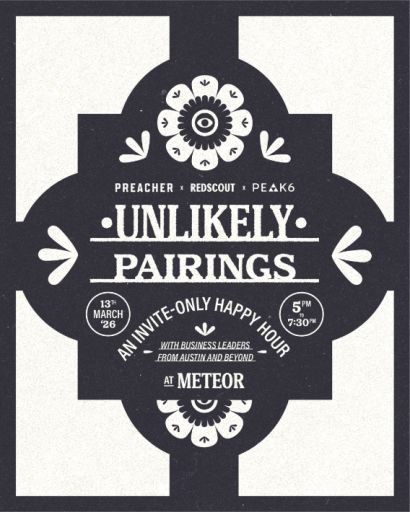
Also, the Boys are in Austin for SXSW this weekend to celebrate the launch of Trials, a new residency by PEAK6 that's led by OG boy, Riyanka Ganguly. In Austin? Join in on the celebration with us at The Meteor this evening for happy hour hangs !
ily,
The first episode of Not Medical Advice, a Boys Club Network show, is now live on YouTube. @emilylai and @bonecondor get into Tirzepatide, a GLP/GLP-1 best known as an appetite suppressant. Like, subscribe, share. More episodes coming soon.

An excerpt from “We're all founders now.”
"I am going to CLONE your shitty enterprise backend in ONE AFTERNOON," X user caiden tweets, in all caps. "Then I am going to SCRAPE your entire customer list. Then I am going to COLD EMAIL every single one of them offering the same product but BETTER and for like 80% LESS because I built it in a DAY with CLAUDE and MODAFINIL."
He closes: "This is SHIPPING CULTURE and we are SO BACK."
This post might’ve been satire, but it’s a sharp commentary on the current state of startup culture. If you scroll on tech Twitter nowadays for 10 minutes, you’ll find dozens of people saying the same thing without irony. The language has taken on a particular cadence: build, ship, scale, repeat, and it belongs to self-proclaimed founders. Not a founder as in someone who started a company to solve a problem they care about, but capital “f” Founder as a title, identity, and a brand. An adjective that describes who you are, or who you’re performing as (which may or may not be the same thing).
The proliferation of the word “founder” isn’t limited to tech. American small business applications are up about 50% from pre-pandemic levels while job growth stalls. There’s a more explicit incubation layer being built around helping celebrities turn fame into companies while Hollywood is still dealing with the aftereffects of the 2023 labor strikes. Clearly, there are larger forces driving people toward entrepreneurship as an identity with “founder” as the catchall term of choice.
In Silicon Valley, this shift didn’t happen overnight. In the early 2010s, the startup world was much smaller and considerably less theatrical. Y Combinator admitted roughly 50 companies per batch in 2013. The barrier to entry was high enough that most people building a company were genuinely committed to and passionate about their work. Founders were the cliché, high-agency people obsessed with solving a specific problem.
Since 2008, startup fervor has ebbed and flowed with two distinct periods of cheap capital. After the recession, the Fed kept its short-term interest rate near zero through 2015. They repeated this playbook during the pandemic. Venture capital investment hit a record $345 billion in 2021, nearly double the amount in 2020. YC ballooned its batches to over 400 companies by their Winter 2022 batch, a nearly tenfold increase in less than ten years.
Everyone, it seemed, was founding something. Tech culture started to shift as well. “Build in public” went from being a niche transparency practice to being a form of LinkedIn performance art. The same economy that brought us CPG brands by reality stars has turned the act of building a company into reality television itself.
In 2025, $274 billion was poured into US startups, with half of all global venture dollars flowing into AI companies. Leaps forward in artificial intelligence had rewritten the investment playbook again. However, this money wasn’t spreading evenly: in Q4 2025, just 117 U.S. deals over $100 million accounted for 75% of total VC dollars, while deal flow for transactions under $100 million fell to its lowest quarterly level since 2012. The big checks were getting bigger, and smaller checks were scarce.

