

Bonjour,
Happy early 4th. I’ll be enjoying the simple pleasures. This week I wrote about why we should start drinking again and people had feelings.
Let’s get a martini together soon!
ily,


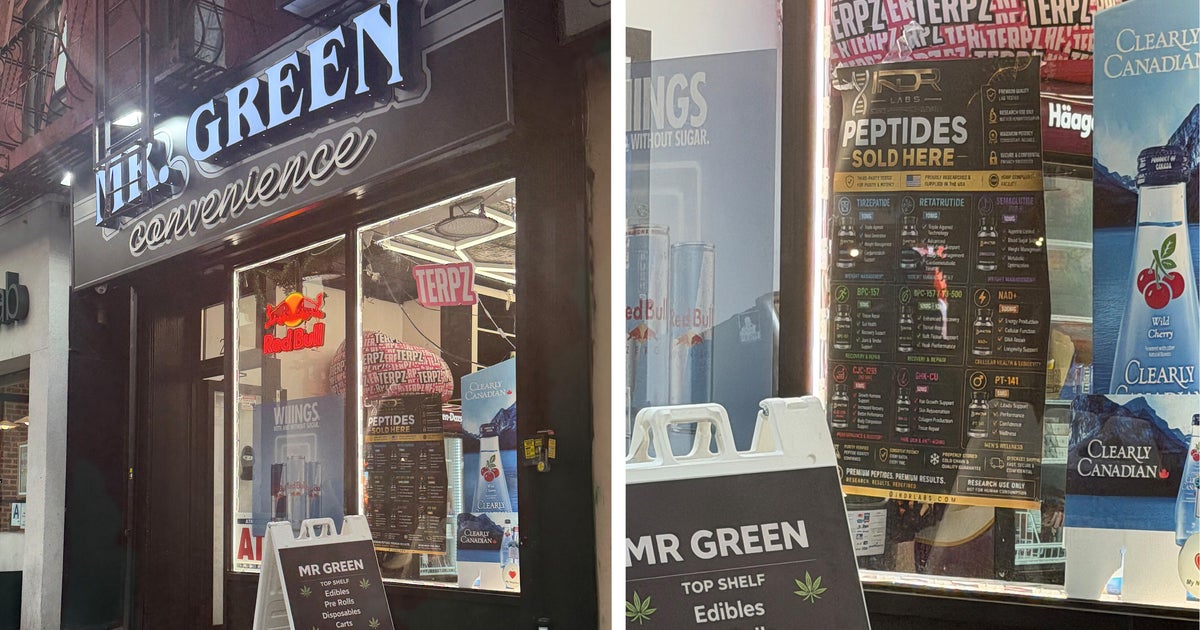
This month on Too Online we’re covering Hot Girl Science and the trends that move markets. A crazy thing is happening on the street corners of New York City. Your favorite bodega is now a peptide dealer.
For those of us who live there, we've been seeing this for weeks. For those who follow CBS news, they found out today.
To level set, peptides are short chains of amino acids that act as chemical messengers. Your body produces them organically, but people are now injecting them to hack their beauty, longevity, and cognitive function, among other things.
Over the last year peptides have gone mainstream due to a confluence of events. Pervasive self diagnosis (230 million people ask ChatGPT about personal health every week), tech culture's obsession with biohacking, and the general public's comfort with self-administration due to widespread use of FDA-approved GLPs.
The reason peptides are showing up next to your gatorade zero and marlboro lights at Joe's Busy Corner is because there are FDA-approved peptides that you can get a prescription for and fill through a compounding pharmacy, and non-FDA-approved peptides that can only technically be sold as "research chemicals," with a whole gray market having formed around the latter. In 2023 the FDA flagged 19 peptides for safety concerns and pharmacies lost the ability to make them overnight. Demand didn't disappear though, it just moved underground.
And like anything you buy underground, quality ranges from goop-gwyneth-paltrow-level testing to a gas station chocolate bar sitting next to your vape.

There's a hearing on July 23-24 where the FDA decides if BPC-157 and six other peptides will get a legal pathway back into pharmacies. When this hearing was announced, compounding pharmacy Hims & Hers Inc. stock jumped 11% in a single day. The peptide movement is symbolic of body autonomy and self diagnosis. But an upgrade to how drugs get researched dropped this week, and it could be what gets these compounds out of your smoke shop display case.
Anthropic launched Claude Science, think Claude Code but for researchers. One interface with 60+ scientific databases integrated and the ability to run it on your own lab server. The launch event read more like a big pharma event than a tech event, with Dario taking the stage with the CEOs of Novartis and Bristol Myers Squibb (two huge pharmaceutical companies) and Lotte Bjerre Knudsen, the scientist who spent 35 years developing the molecule that eventually brought us Ozempic and Wegovy.

At the event, a UCSF epidemiologist showed he cut his lab's germline analysis time by 90% using the tool. Basecamp Research demoed designing a custom antibiotic from a patient report in minutes. There was also a healthy level of skepticism on the timeline, pointing out that Claude Science runs on the same models as everything else, that no AI-discovered drug has ever passed FDA approval, and that Dario himself walked back some of the more extreme timeline predictions.
However, you can see a world where, just like Claude Code turned software development upside down, Claude Science transforms the way drugs are researched and developed, making them cheaper and faster to produce, and potentially even generating the clinical trial data that grey area bodega peptides have never had. We've got to hope for something because the alternative is to think about this.

