


Bonjour,
I saw Wuthering Heights last night. It was bad. I think you should see it.
This week we made our return to the studio with Boys Club Live. Catch the latest ep here.
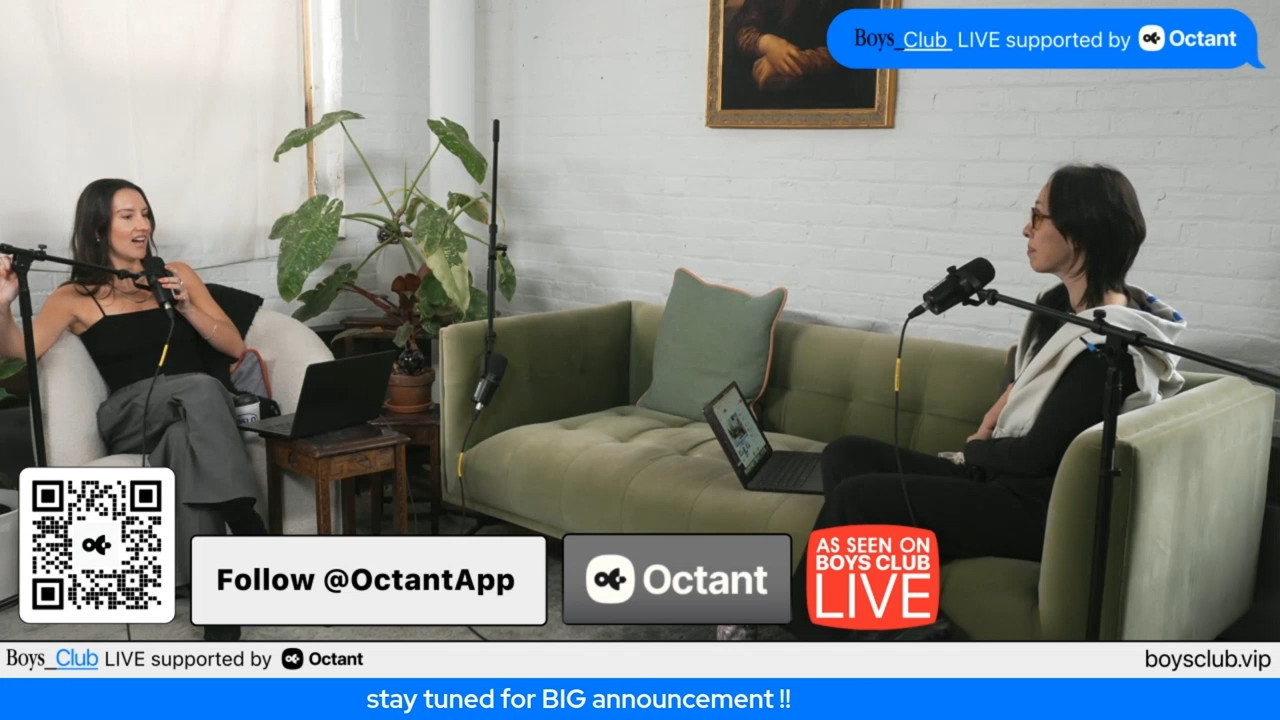
Being back on camera is humbling but s/o to Octant and Anchorage Digital for supporting this season of the show.

In other news, our first editorial co-post with Dirt Media went live this morning, so today’s newsletter features an excerpt from that piece. Written by Annie Lloyd, “Dude, the Internet” looks at the TV show Halt and Catch Fire as a time capsule of tech’s idealistic beginnings, set against the more disillusioned reality of today’s internet. I hope you like it!
ily,
Writers: Natasha
Polygon is doing cool stuff at the Olympics.

An excerpt from “Dude, the Internet.”
Annie Lloyd on Halt and Catch Fire as a techno-optimist time capsule. This piece was published in collaboration with Dirt.
In the penultimate episode of Halt and Catch Fire, the team at a fictional web-indexing startup called Comet watches a commercial for the Internet. Or, more specifically, a commercial for what they might be able to find on the Internet. The ad, a paragon of 90s diversity culture, features different people from all walks of life describing things they’re looking for.
“Supplies,” someone says. “Shoes,” says another. “For the meaning of life, bruh” a hippie holding a bongo cries out. Different voices all saying “I’m looking for” blend together over stock video footage of galloping horses, the universe, and a newborn baby, before the ad cuts to a male college student who grins at the camera and says, “Dude, the Internet.”
The year is 1994. Netscape is about to launch the Netscape Navigator browser with Yahoo! as a built-in component of its toolbar. The Internet was a year out from the end of its last remaining anti-commercial guardrail. The possibilities were endless; the future was here.
***
This Halt and Catch Fire episode aired on October 14, 2017. By then, the Internet had lost its utopian sheen. The “alt-right” had gained mainstream awareness for its white nationalism through strategic uses of online forums and economic anxieties about the rise of platform-based gig work had reached the upper echelons of politics. And yet, despite beating a retro drum of hopefulness, Halt and Catch Fire struck a chord. Critics hailed it as one of the best shows of the decade. The delta between reality and fiction was its value, many of them wrote. During its AMC run from 2014 to 2017, the show provided an alternate history to live in—one where a person could still believe that the whole point of tech was to connect people, not alienate them from each other.
At the time, critics mostly took for granted Halt and Catch Fire’s greater value: it’s an excellent television show that grew in sophistication over multiple seasons, isn’t based on existing IP, and isn’t a cookie-cutter genre exercise. The encroachment of the tech industry into Hollywood itself has potentially made prestige television shows like Halt and Catch Fire one of the television industry’s last products that can stand the test of time. Firstly, because the quality of television has cratered in the past decade. Secondly, by focusing its narrative on the tech industry itself, Halt and Catch Fire’s staying power has only increased. The story it tells still has something to say about our present-day reality.
The show tells the story of the Silicon Prairie and Silicon Valley in the 80s and early 90s, focusing on the careers and ambitions of a handful of hardware and software engineers, a restless ideologue, and the unsuspecting people who got caught up in their dreams. The creators of the show made a point to avoid revolving its narrative around the Steve Jobses and Bill Gateses of the world. Instead of retreading hagiographic stories, then, Halt and Catch Fire wove a more relatable and interesting one, wherein the core team experienced false starts, genuine breakthroughs, and internal competition in conversation with mainstream tech success stories: i.e. the laptop, Apple’s Macintosh, online credit card payments.
Being online is the narrative telos of the series, even before the characters know what the Internet is. When the protagonists first read the research paper that describes the World Wide Web at the end of the third season, the plot transforms from that of a period piece to that of an origin story. This is the whole point, according to Joe, the aforementioned restless ideologue and the show’s oracle, the one who, at nearly every juncture, bets on the accurate future, but the wrong product. The idea is that we, as viewers, have always known that being online is the whole point.
It isn’t until the final episode in 2017 that being online (in the world of the show) had ceased to hold the propulsive charge it held for the whole series and had finally become commonplace. The next frontier, as hinted by the last scene of the show, would instead be a world where digital connectedness extends far beyond the desktop and modem—it would be a world where the Internet was everywhere.

